

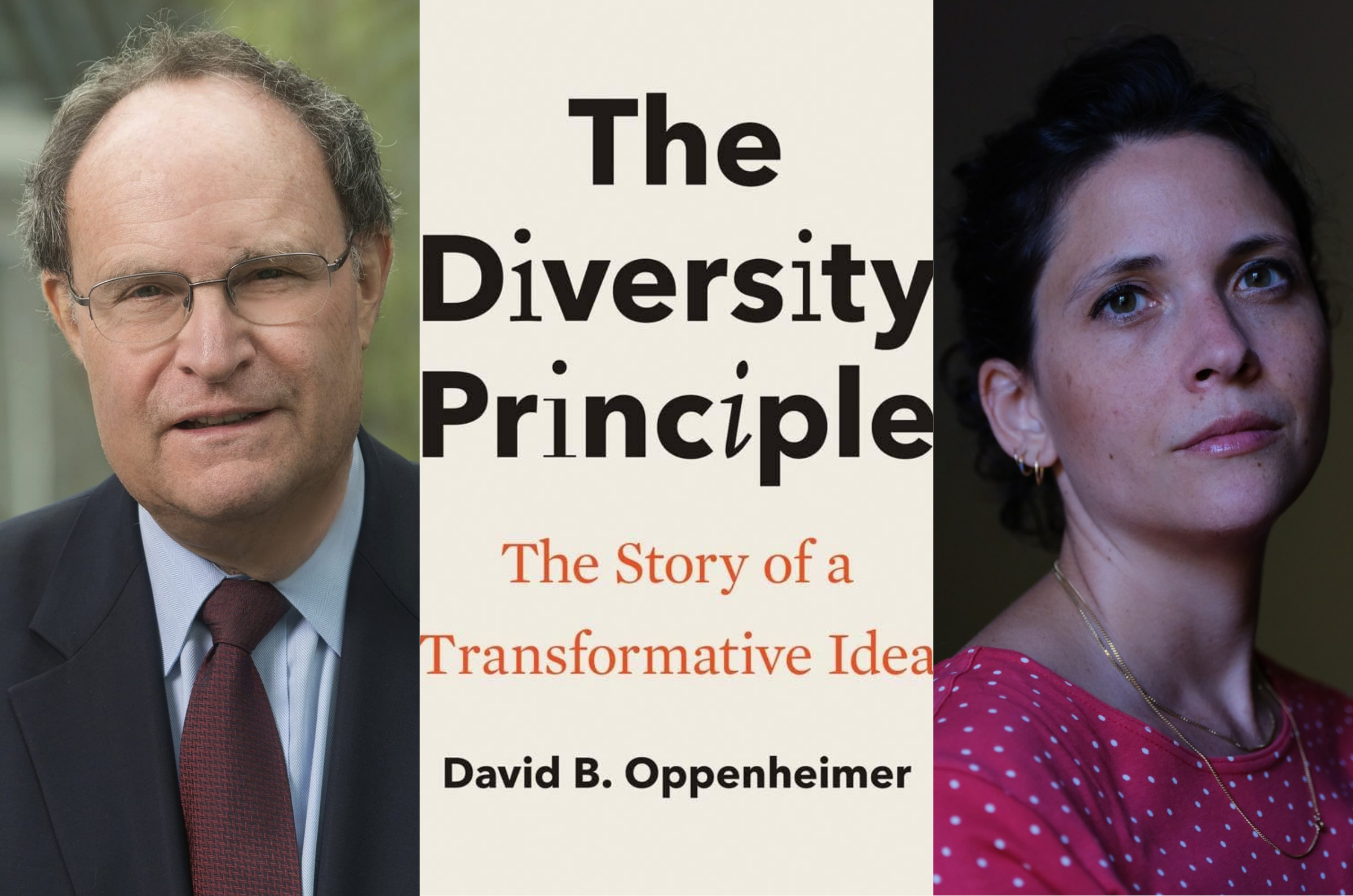
How did diversity become a defining principle of higher education, scientific inquiry, and democratic society? What do we make of today’s backlash against it?
Join David B. Oppenheimer, professor at the University of California, Berkeley School of Law, for a conversation about the two-hundred-year history of the diversity principle, from the Enlightenment and the first modern research universities to the concept’s influence on thinkers including John Stuart Mill, Thurgood Marshall, Ruth Bader Ginsburg, and Pauli Murray.
Moderated by journalist Isabelle Hanne of Libération, the discussion will examine the philosophical foundations of diversity and what today’s political backlash reveals about its future in education, public life, and democracy.
About the speakers:
David B. Oppenheimer is a Clinical Professor of Law at the University of California, Berkeley School of Law, and Co-Director of the Berkeley Center on Comparative Equality and Anti-Discrimination Law. He holds a JD degree from Harvard. In his clinical work he has consulted on over 100 discrimination and harassment cases in Asia, Europe, North America, and Latin America. He is the author or editor of ten books on US and global discrimination law. His newest book, The Diversity Principle: The Story of a Transformative Idea, was published in 2026 by Yale University Press.
Isabelle Hanne is a French journalist for Libération, where she covers international affairs. From 2017 to 2021, she was the newspaper’s U.S. correspondent, reporting extensively on American politics and society, from voters’ polarization to reproductive rights, race, gun violence, culture wars and the deep transformations reshaping the country. She is the author of Le Choix (éditions Goutte d’or, 2022), a novel about abortion in the United States, exploring the personal and ideological stakes of the issue. She now lives in Paris but continues to travel regularly to the U.S., including for a book about American foodways.