

America 250 at the Library
Discover our series of lectures, walking tours, and reading lists to celebrate the 250th anniversary of the United States Declaration of Independence.
Pop-Up Library at Paris Plages
Join us at the water’s edge for a pop-up library and open-air reading space at Paris Plages.

Events
List of events in Photo View
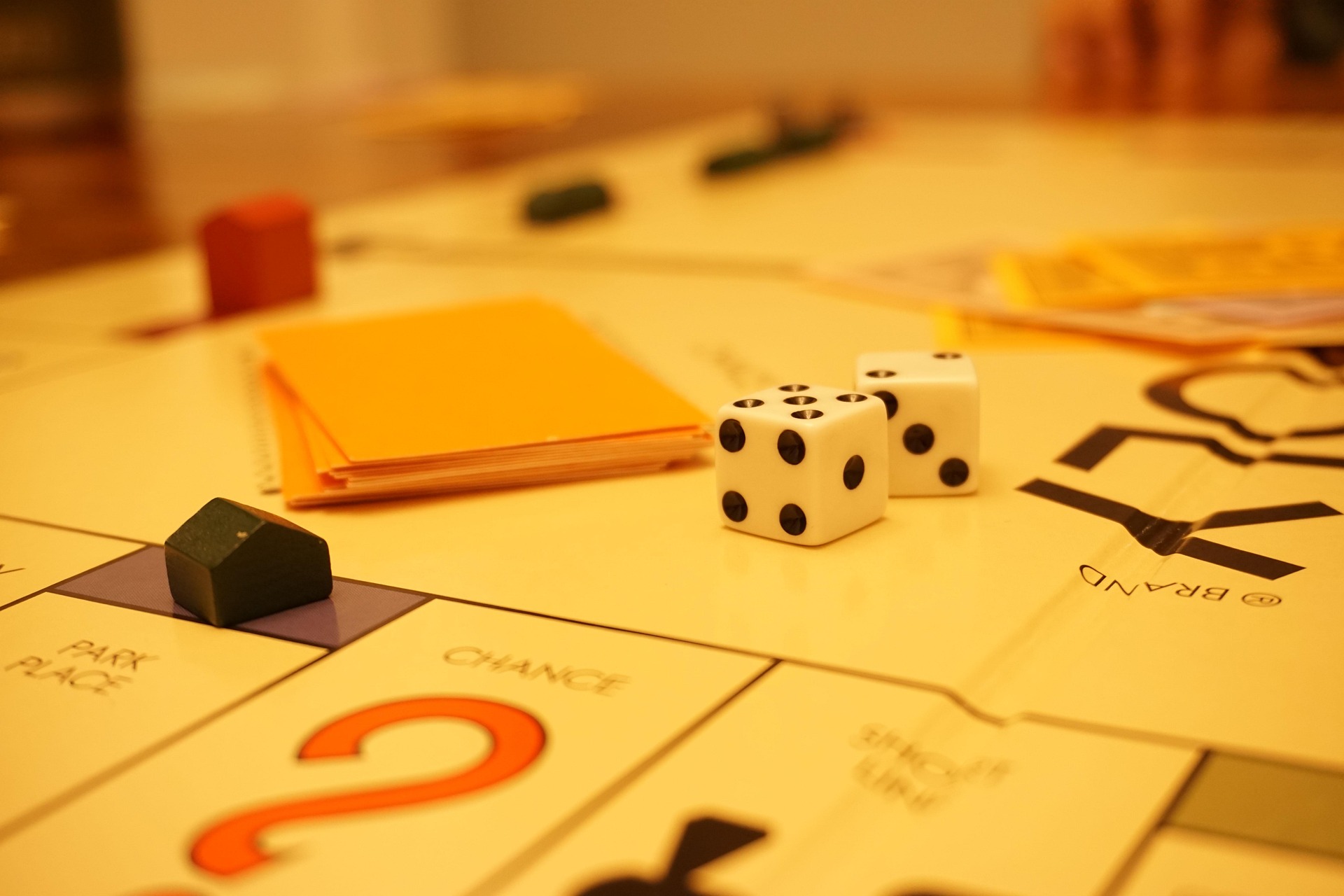
250 Years of Independence
Reading List
Browse our reading lists to explore the American Revolution.
- Brothers at arms: American independence and the men of France and Spain who saved it by Larrie D. Ferreiro
- Revolution song: A story of American freedom by Russell Shorto
- The contagion of liberty: The politics of smallpox in the American Revolution by Andrew M. Wehrman
- The Press and the American Revolution by Bernard Bailyn & John B. Hench
- The unknown American Revolution: The unruly birth of democracy and the struggle to create America by Gary B. Nash
- The common cause: Creating race and nation in the American Revolution by Robert G. Parkinson
- Washington’s Marines The Origins of the Corps and the American Revolution, 1775-1777 by Jason Q. Bohm
- The cause: The American Revolution and its discontents, 1773-1783 by Joseph J. Ellis
- A new age now begins: A people’s history of the American Revolution Page Smith
- The radicalism of the American revolution by Gordon S. Wood
- Revolutionary summer: The birth of American independence by Joseph J. Ellis
- Women of the Republic: Intellect and ideology in revolutionary America by Linda K. Kerber
- Adopted son: Washington, Lafayette, and the friendship that saved the Revolution by David A. Clary
- 1774: the long year of Revolution by Mary Beth Norton
- Setting the world ablaze: Washington, Adams, Jefferson, and the American Revolution by John Ferling
- The quartet: Orchestrating the second American Revolution, 1783-1789 by Joseph J. Ellis
- Friends of liberty: Thomas Jefferson, Tadeusz Kosciuszko, and Agrippa Hull by Gary Nash and Graham Russell Gao Hodges.
- Rush: Revolution, madness, and the visionary doctor who became a founding father Stephen Fried
- Jefferson: Architect of American liberty by John B. Boles
- Fallen founder: The life of Aaron Burr by Nancy Isenberg
- The revolutionary: Samuel Adams by Stacy Schiff
- Samuel Adams: A life by Ira Stoll
- Hero of two worlds : the Marquis de Lafayette in the Age of Revolution by Mike Duncan
- Lafayette in the somewhat United States by Sarah Vowell
- Thomas Paine: Apostle of freedom by Jack Fruchtman, Jr.
- A great improvisation: Franklin, France, and the birth of America by Stacy Schiff
- The odyssey of Phillis Wheatley: A poet’s journeys through American slavery and independence by David Waldstreicher
- The first American: The life and times of Benjamin Franklin by H.W. Brands
- Colonial American travel narratives by Wendy Martin, Susan Imbarrato, and Deborah Dietrich
- Travels, and other writings by William Bartram
- A cultural history of the American Revolution: Painting, music, literature, and the theatre in the Colonies and the United States, from the Treaty of Paris to the Inauguration of George Washington, 1763-1789 by Kenneth Silverman
- Three centuries of American art by Lloyd Goodrich
- The flowering of American folk art, 1776-1876 by Jean Lipman and Alice Winchester
- American visions: The epic history of art in America by Robert Hughes
- The American art book
- Still looking: Essays on American art by John Updike
- America as art by Joshua C. Taylor
- The great American thing: Modern art and national identity, 1915-1935 by Wanda M. Corn
- Pop art images of the American dream Photography by Ken Heyman. Foreword by Samuel Adams Green
- Visions of America: Landscapes as metaphor in the late twentieth century essays by Martin Friedman
- American encounters: Genre painting and everyday life by Peter John Brownlee
- The American century: Art and culture, 1900-1950 by Barbara Haskell
- The American heritage cookbook and illustrated history of American eating and drinking by Cleveland Amory
- Eating in America: A history by Waverley Root & Richard de Rochemont.
- Sheila Lukins USA cookbook by Sheila Lukins
- Peach Street to Lobster Lane: Coast to coast in search of real American cuisine by Felicity Cloake
- Eight flavors: The untold story of American cuisine by Sarah Lohman
- The cooking gene: A journey through African American culinary history in the Old South by Michael W. Twitty
- The taste of country cooking by Edna Lewis
- A people’s history of American empire: A graphic adaptation by Howard Zinn, Mike Konopacki and Paul Buhle
- American politics: A graphic guide by Laura Locker and Jules Scheele
- Suffrage song: The haunted history of gender, race, and voting rights in the United States of America by Caitlin Cass
- Born in the USA: The story of immigration and belonging by Lawrence Goldstone and James Otis Smith
- A most imperfect union: A contrarian history of the United States by Ilan Stavans and Lalo Alcaraz
- Wake: The hidden history of women-led slave revolts by Rebecca Hall, Hugo Martainez and Sarula Bao
Borrow today from Libby
Want to immediately dive in? Borrow these titles from the Libby App and start reading today:
- Valiant Ambition: George Washington, Benedict Arnold, and the Fate of the American Revolution by Nathaniel Philbrick
- The Notorious Benedict Arnold by Steve Sheinkin
- A Young People’s History of the United States by Howard Zinn
- We the People by Jill Lepore
- South to America by Imani Perry
- American Struggle by John Meacham
- We the Women by Norah O’Donnell and Kate Anderson Brower
- Our Fragile Freedoms by Eric Foner
New to Libby? Here’s how to get started:
1. Download the app on the App Store or Google Play
2. Search the American Library in Paris and sign in with your library card.
3. Browse and borrow our collection of e-books, e-audiobooks, and e-magazines.

PAST PROGRAMMING
The American Revolution in Paris
A series of walking tours and lectures with Mary Jo Padgett
Few visitors to Paris realize how pivotal a role the city played in securing American independence. Join us for a series of three guided walking tours or a series of four illustrated lectures tracing the French chapter of the American Revolution. While the small-group walks bring the city’s revolutionary sites to life on the ground, the lectures explore all twenty-three locations through photographs and discussion.
About the guide
Mary Jo Padgett has been leading American Revolution history walks and lectures in Paris since 2013, with programs presented through the American Library in Paris, the American Embassy, and WICE.
America 250 Walking Tours
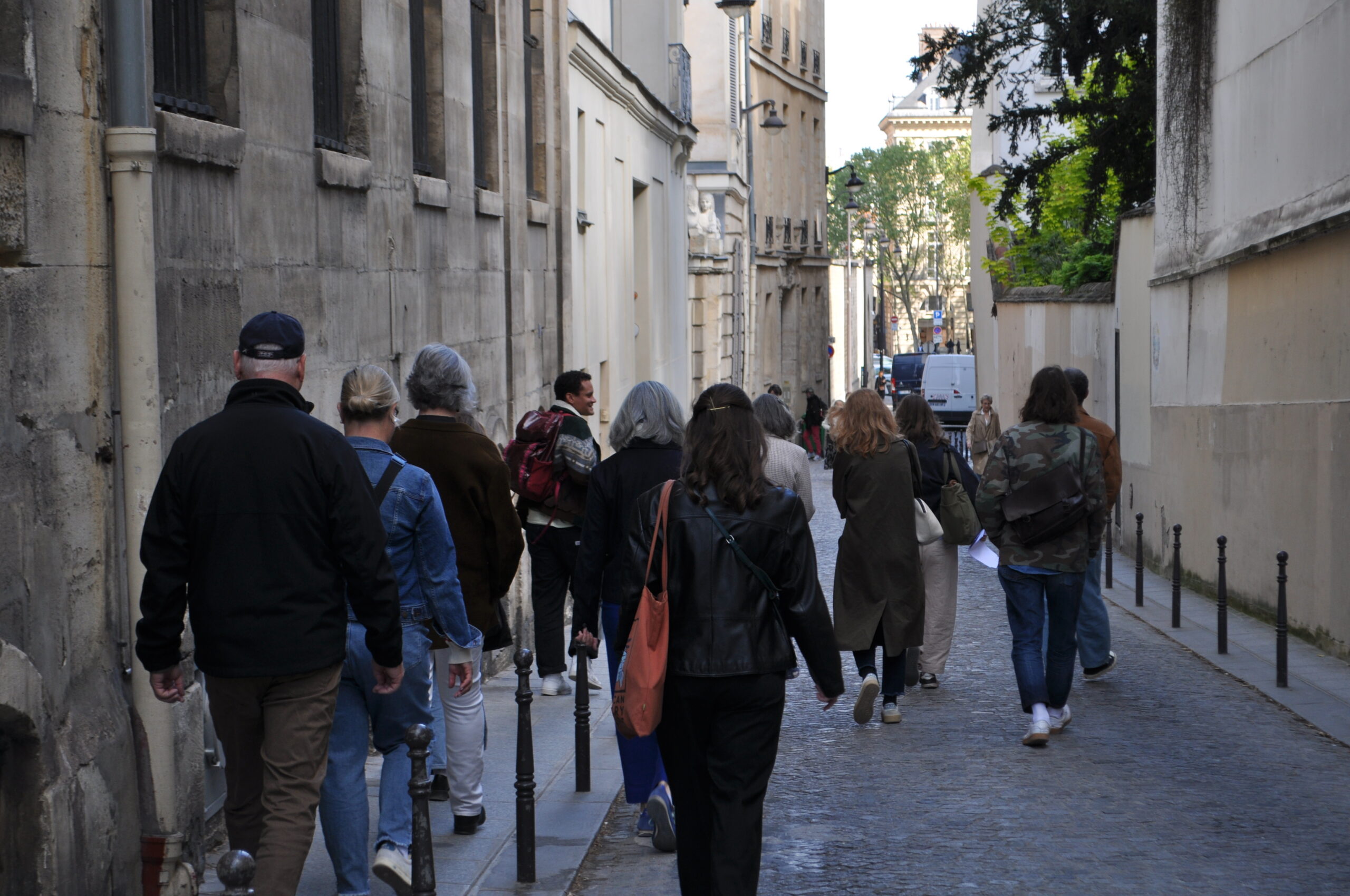
Limited to 12 participants
Tuesday June 9 1:30 – 4:30 pm
I. Franklin and Adams in Passy
From Autueil to the Champs Elysées
This walk begins in the quiet residential streets of Auteuil, where John Adams and his family lived in 1784–85, and where his neighbor—the brilliant, unconventional Madame Helvétius—kept a salon that Benjamin Franklin adored. From Passy and Square Yorktown to Place d’Iéna and Square Rochambeau, we follow the traces of Franklin, George Washington, and Thomas Jefferson as we move through some of Paris’s most magnificent streets.
The walk closes at a local café.
Tuesday June 16 1:30 – 4:30 pm
II. Sites of Treaty of Paris
From Palais du Luxemburg to Rue Jacob
We begin at the Palais du Luxembourg, a prison during the French Revolution, and the place where Thomas Paine was held captive. From there, a stroll brings us to the legendary Café Procope, where Franklin, Jefferson, Jones, and Voltaire were all regulars, and we follow Jefferson’s own path through the bouquinistes from which he assembled the collection that would eventually form the Library of Congress. The walk ends at the Hôtel d’York, 56, rue Jacob, where the Treaty of Paris was signed in 1783, and American independence became a matter of international law.
Tuesday June 23 1:30 – 4:30 pm
III. Enduring France-American Ties
From Musée d’Orsay to Bourse de Commerce
This third walk takes up the story where the war left off, tracing the enduring ties between France and the young American republic. We begin at the Musée d’Orsay and Thomas Jefferson’s favorite view in Paris, then follow through the Tuileries to Hôtel de Coislin, where France formally recognized American independence. The walk ends at the Bourse de Commerce, whose surprising connection to both Franklin and Jefferson will be revealed on the day.
America 250 Lectures
Sunday June 7, 2:00 – 4:00 pm
I. Early French Aid to the American Revolution
From the fictitious trading company established by Beaumarchais in 1776 to secretly supply arms, ammunition, and uniforms to the under-armed American Insurgents, to the private cemetery where La Fayette is buried, to the upscale building where John Paul Jones died, and more – we look at American heroes in Paris and how the French helped the insurgents in the
Sunday 14 June, 2:00 – 4:00 pm
II. The Franco-American Alliance
This session explores the important French military assistance during the 8 years of the American Revolution provided by Admiral de Grasse and others, the neighborhoods where Benjamin Franklin and John Adams lived while negotiating French support, and where the treaty was signed that ended the War of Independence.
Sunday 21 June, 2:00 – 4:00 pm
III. Jefferson, Paine, and the Paris Salons
We learn about important places where secret plans were hatched to support the American Insurgents which helped lead to a successful outcome … and then pick up the thread of how the Americans continued to lean on and learn from experienced French connections during the early years of a new country.
Sunday 28 June, 2:00 – 4:00 pm
IV. From Revolution to Republic
Post-American Revolution, strong connections between the two countries continued. Between the end of the American Revolution in 1783 and the beginning of the French Revolution in 1789 and after, mutual exchanges of respect, information, and philosophy occurred.